
Our brains are designed to connect new and existing information into categories (aka schema). By seeing similarities and differences between two places or ideas, humans can build a stronger understanding of what makes something unique.
How is the culture of Cartagena unique when compared to other places? By asking our kids to consider this, we learn what they are paying attention to.
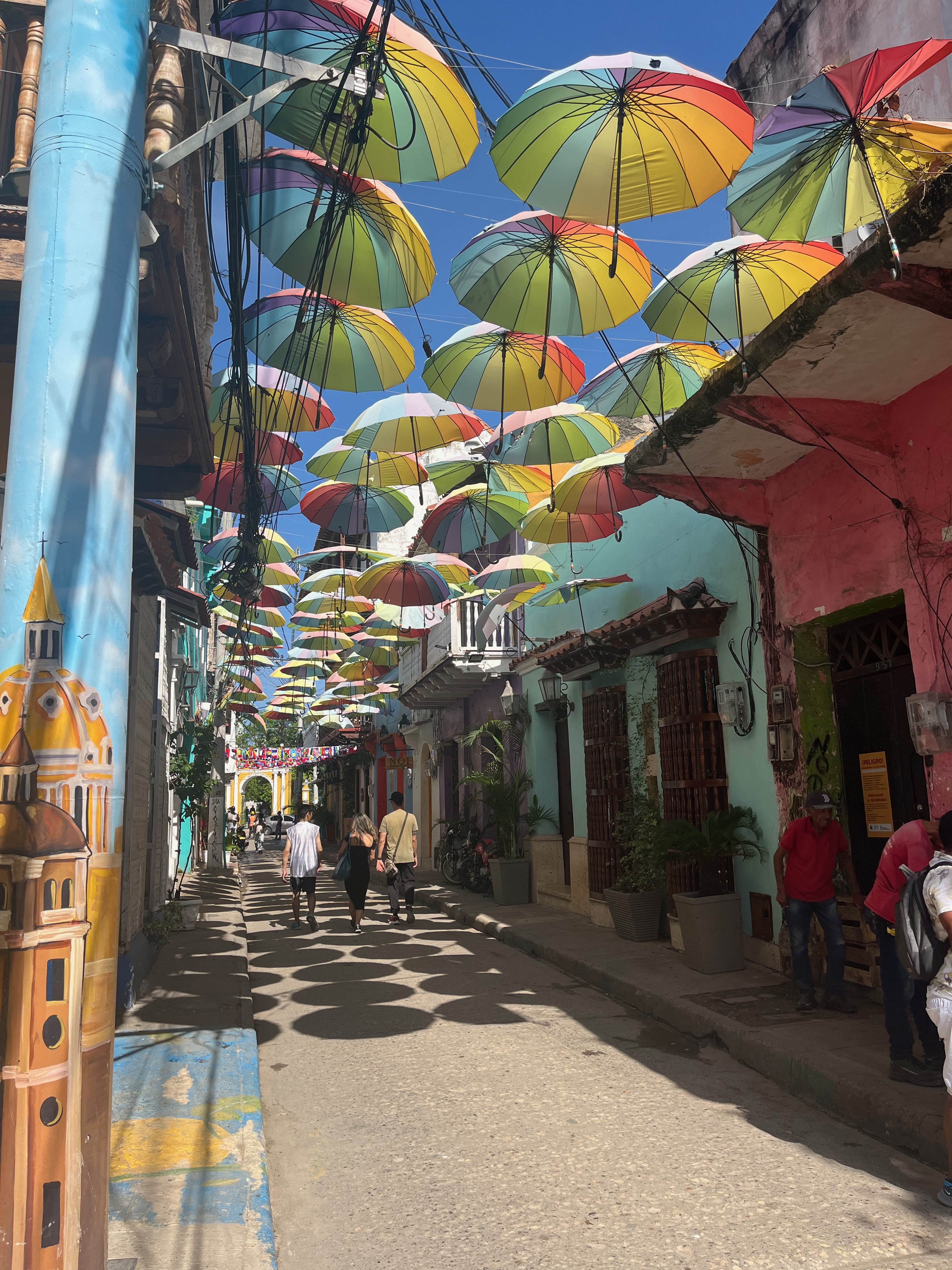
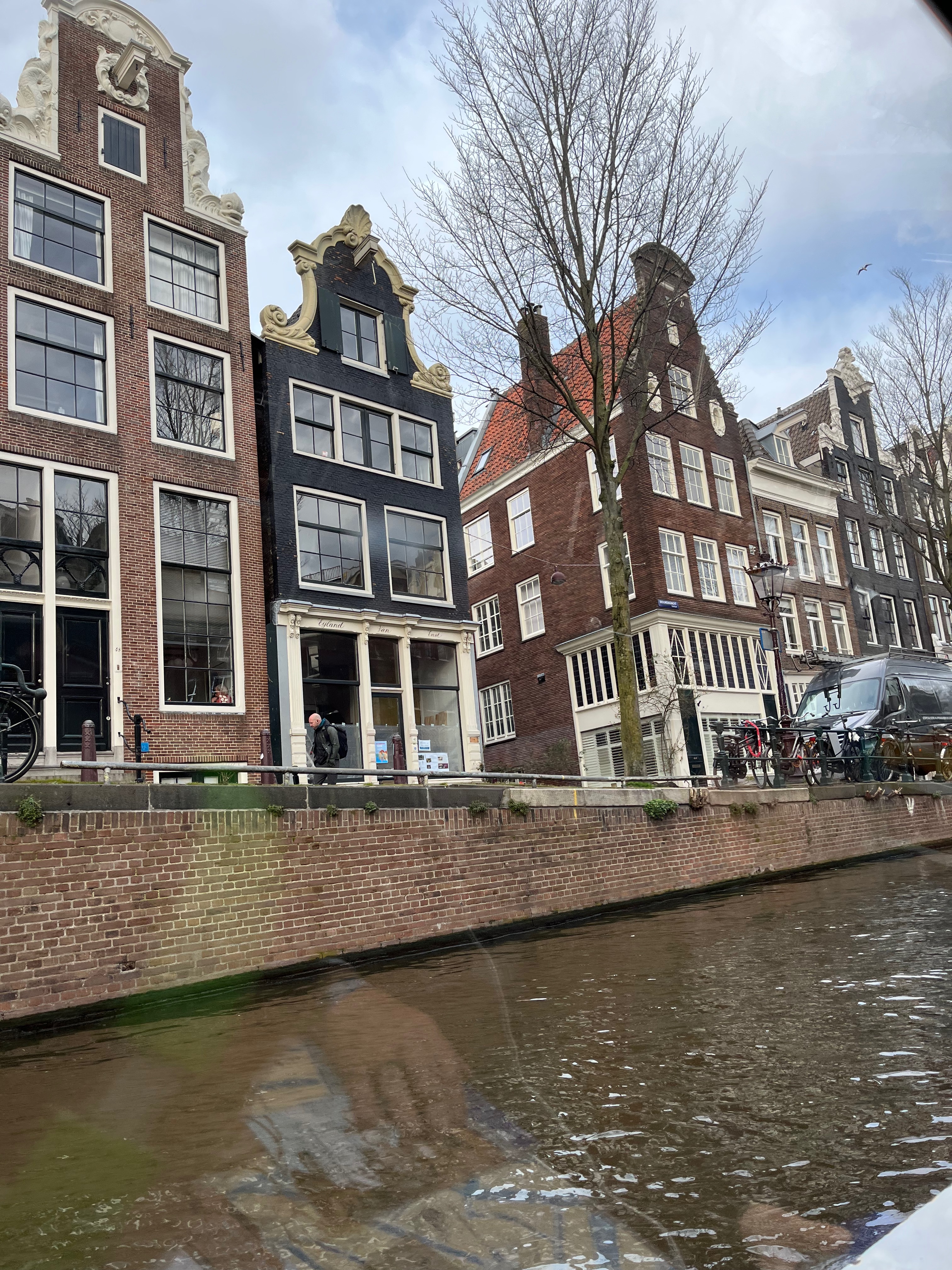
At a glance, would anyone consider Colombia similar to the Netherlands? Not really. But then we noticed that the museum model of the original town had hooks on the top of the buildings which helped hoist goods from the water next to it- just like they learned about the canal houses in Amsterdam. Water and resilience continue to be a huge part of the success of industry in both locations. The kids pointed out that in both places, our tour guides were from a country outside of the one we visited.
Activity Directions:
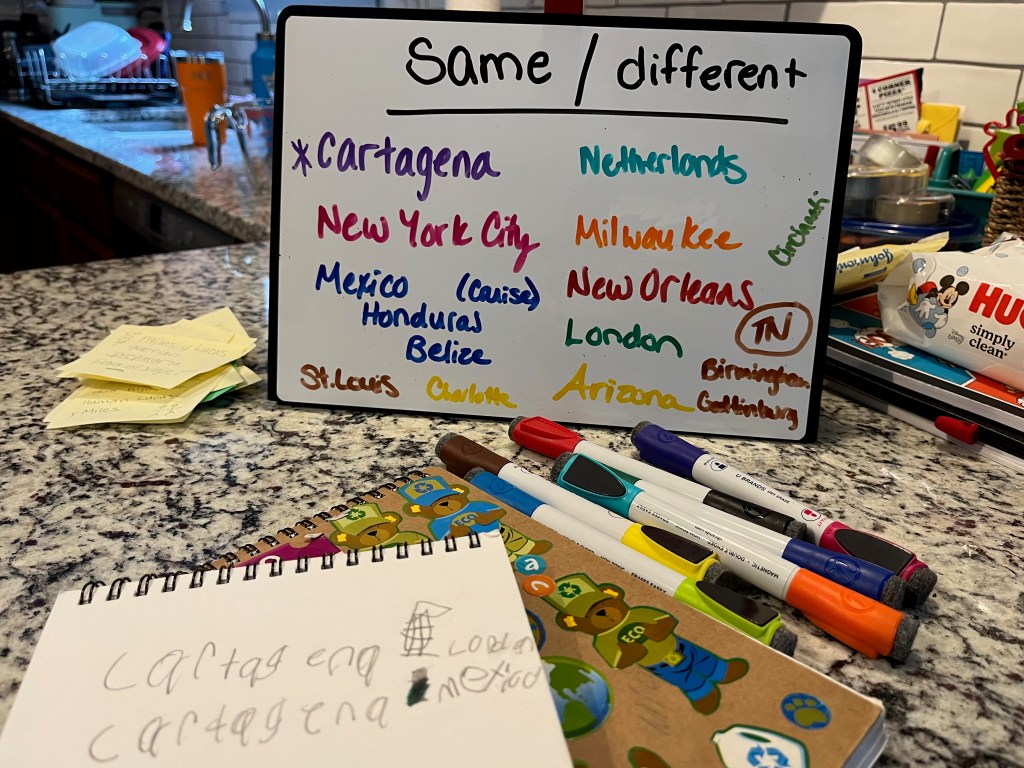
- Make a list of places to compare.
- Tip: If you have a scratch-off or colored-in map of places they’ve visited, this would be a great time to pull it out. Picture albums, postcard collections, or other visuals could also be helpful.
- What is similar about these places? What is different? Talk about it first.
- Tip: Some possible categories to prompt: languages, continents, cultural values, transportation, food, activities on the trip.
- Compare to your home or own lives. What is the same and different?
- Write or illustrate. Have them choose which similarity or difference was their favorite or most surprising and write and/or illustrate it.
- Tip: If your kids have been keeping a travel journal, this would be a great place for it. We purchased these journals for our recent trip. They were cheap, yet durable.


 Domino Tracks