

In studying about Picasso, we learned that before he discovered his signature Cubist style, he learned technique by imitating artists. He imitated Velazquez, El Greco, and many others. We can also learn about art techniques and styles through imitation of artists, including Picasso.
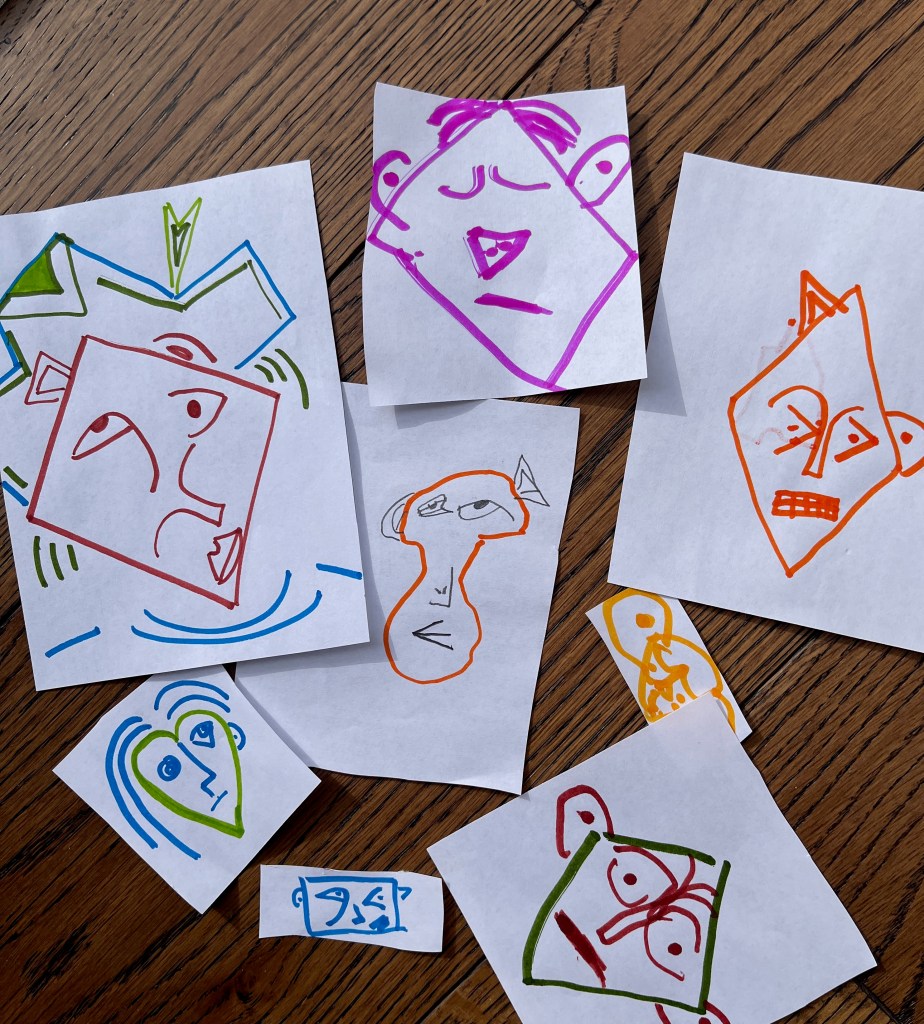
To learn about Picasso, we watched videos and read a book about his life and art. While browsing online, the kids pointed out works from his Blue Period, Rose Period, and Realistic art from his younger years.
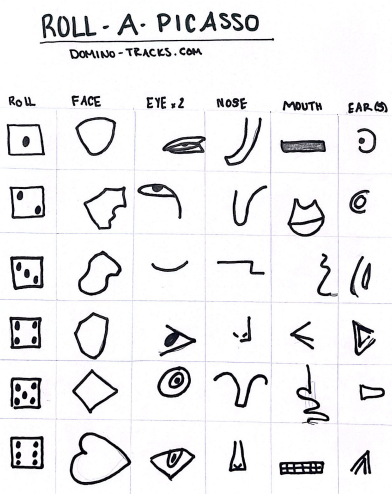
There are many Roll-A-Picasso activities online, and we had a blast trying one out. The next day, we made our own by taking turns adding face shapes, eyes, noses, and mouths from his art at the Málaga Picasso Museum. We hope to visit on our upcoming trip.
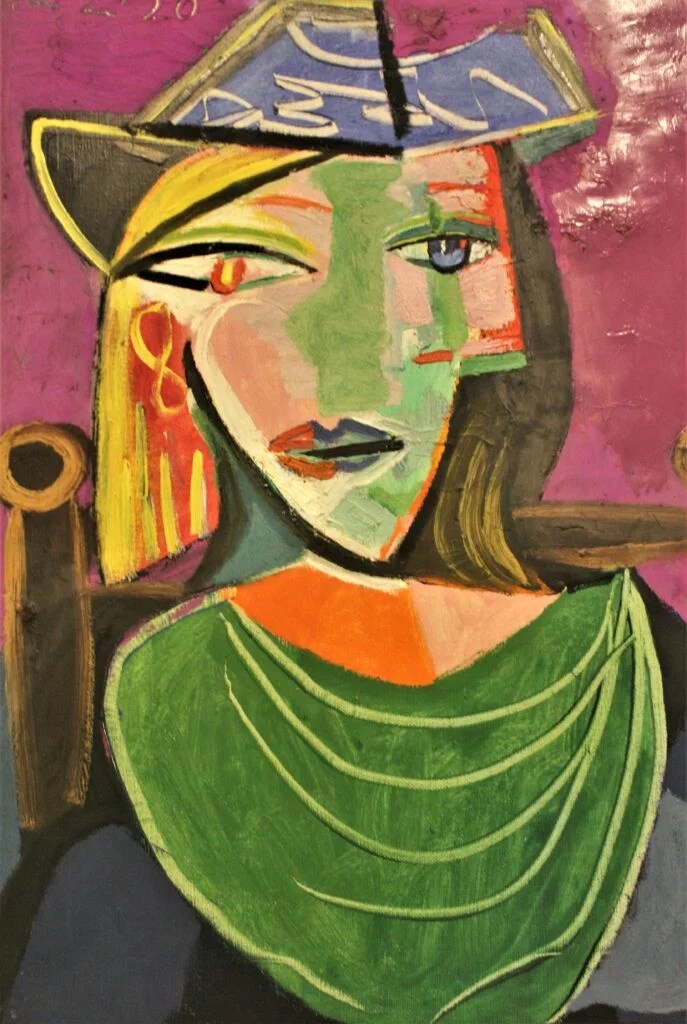
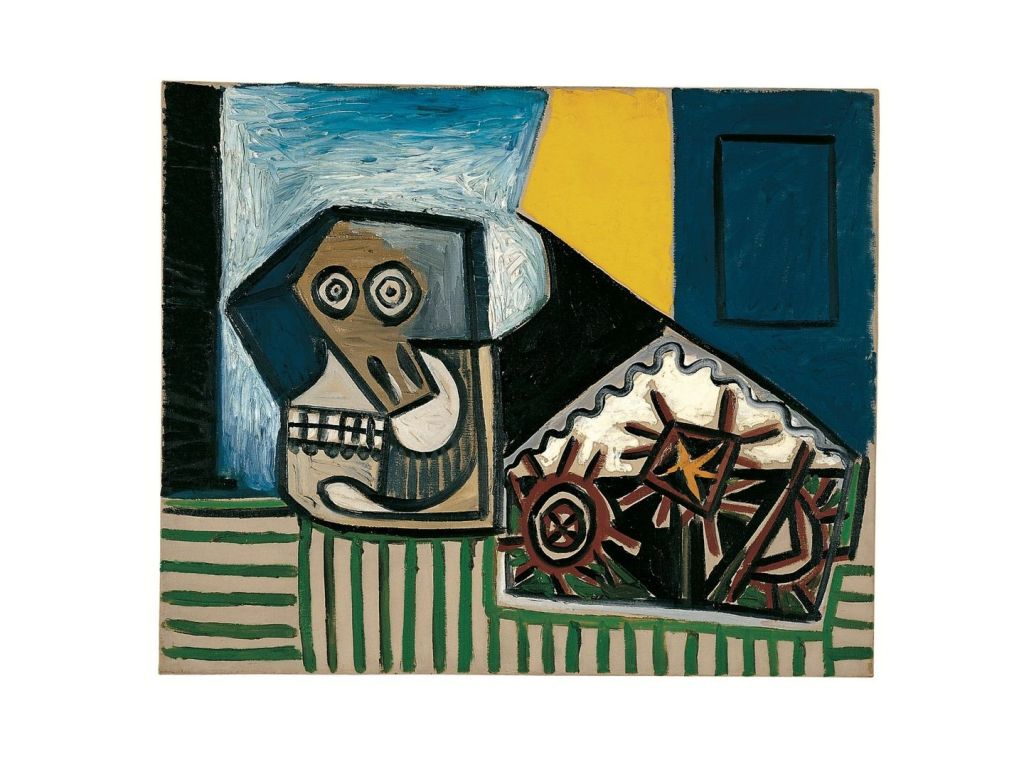

Picasso created over 50,000 works of art, and they’re spread all over the world. To create your own Roll-A-Picasso activity, I recommend searching the works at the museum you’re headed to. Then, draw the different face components from those.
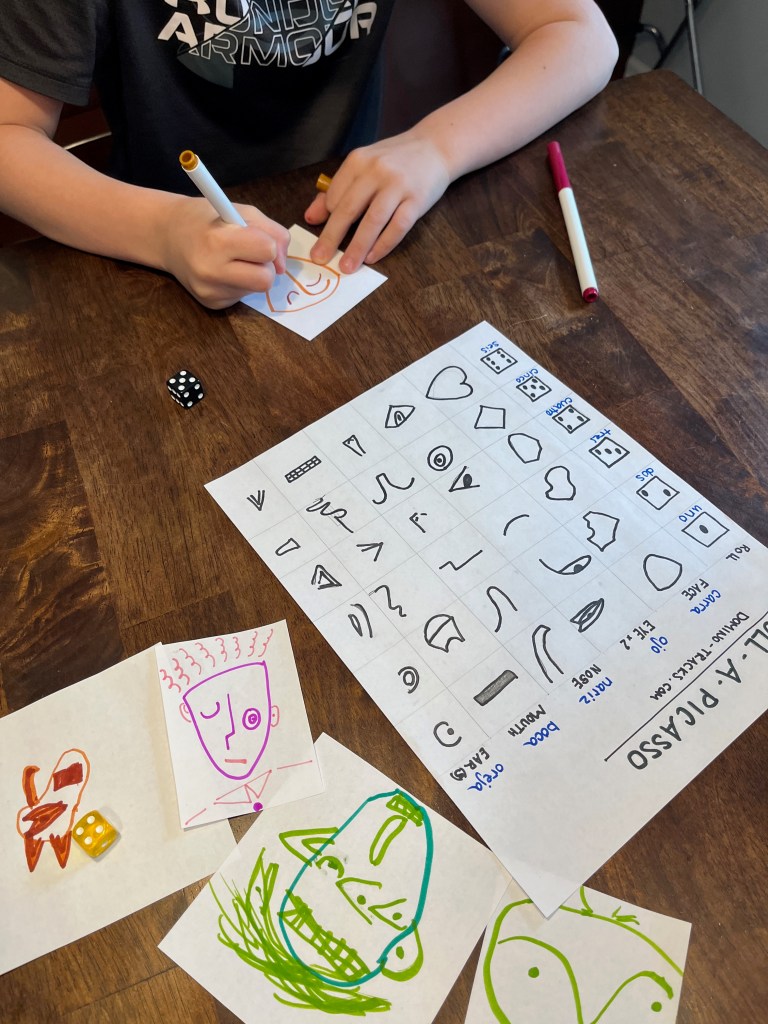
This was a fun activity to do over FaceTime with distant friends and family. We were out for snow days, and others enjoyed a quick art break with us.

Artistic Imitation has helped our kids recognize works by Van Gogh, Mondrian, and O’Keeffe on previous adventures. I can’t wait to see what connections our kids will make when we visit the Málaga Picasso Museum.
What other learning would work as a dice rolling activity?
- Exploring other artists like Kandinsky, Mondrian, or Klee
- Engineering projects like design a city, palace, or fortress
- Writing a story: character, location, time period, problem
- Other ideas???


 Domino Tracks
Leave a comment