
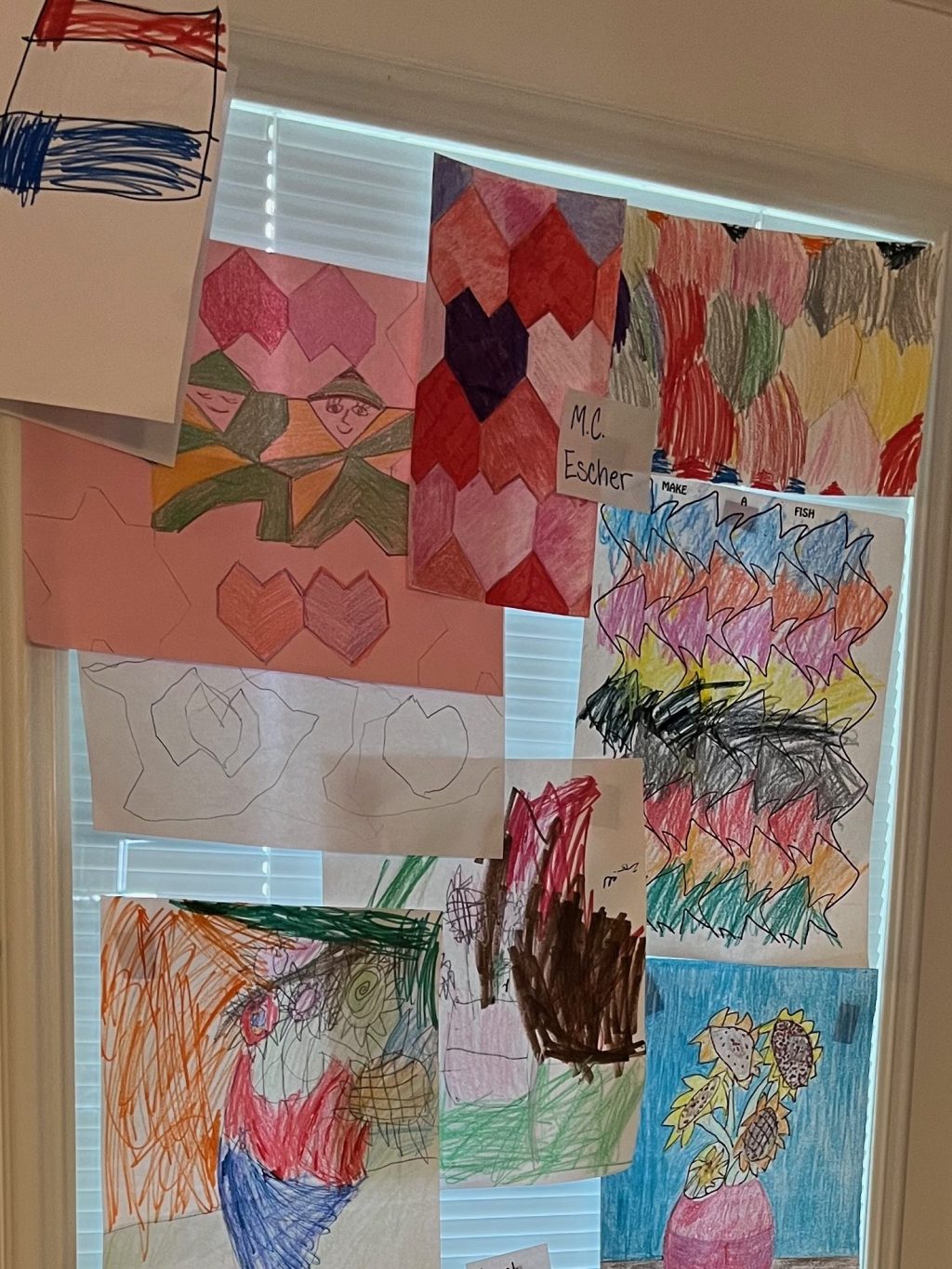
Was MC Escher an artist or mathematician? Well, both really. His work is fascinating and I was thrilled to get to see it in person at Escher in Het Palais in the Hague, NL. Knowing the emphasis on patterns for young learners, this seemed like an artist the boys would really connect with and have fun imitating the style.
Step 1: Learn about the artist and their style.
We learned about Escher and his style through videos, library books, and analyzing his artwork. Helpful questions were:
- What shapes, patterns and repetition do you see?
- What is the same and different about his work?
- How is his work similar to a puzzle?
- What optical illusions can you find in his work?
Step 2: Imitate the style with our own interpretations.
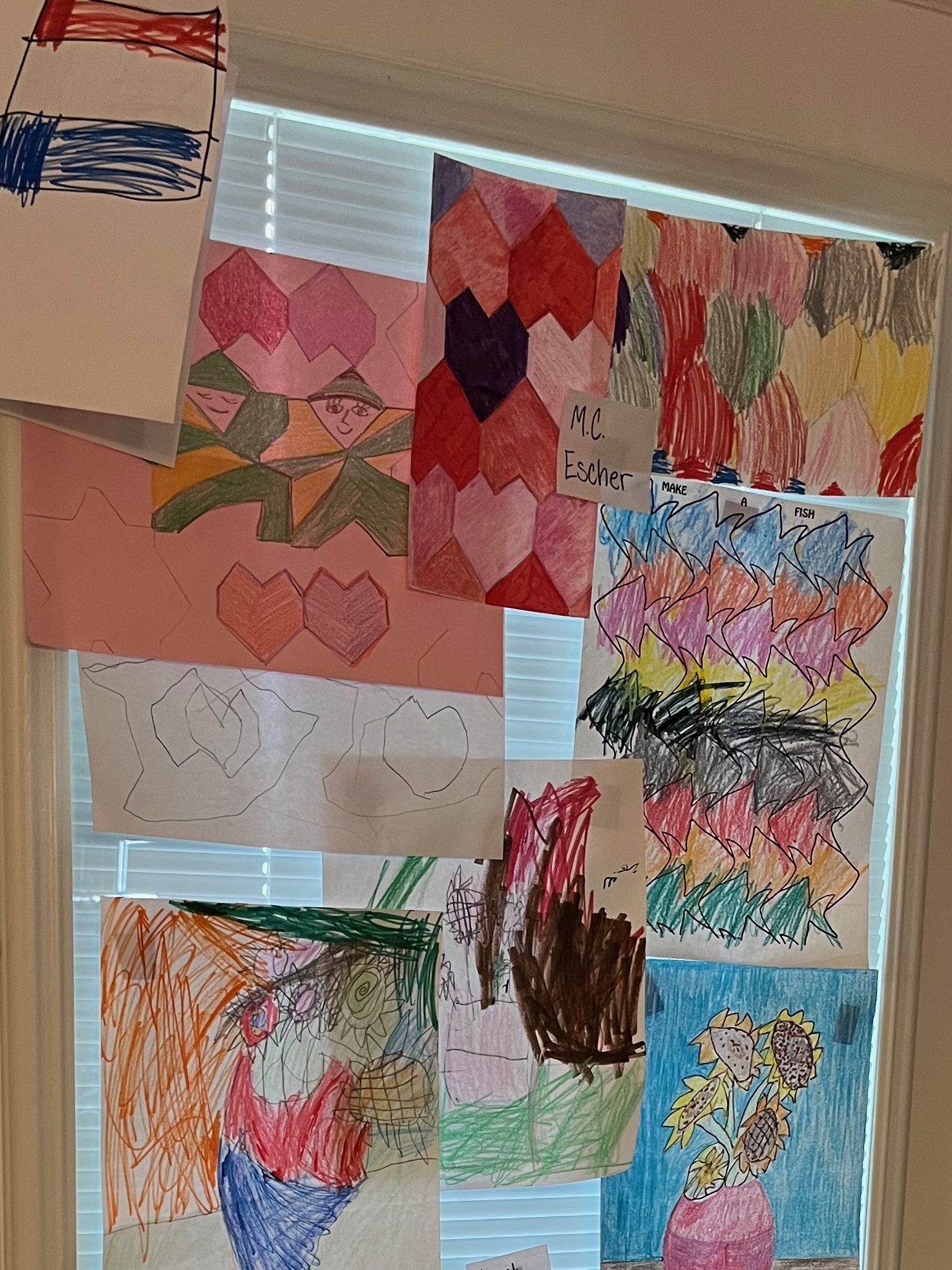
For this artist, we focused on simple patterns and tessellations. We played around with two different strategies.
a. Use cardstock or cardboard to cut out a shape template that can be traced in a repeating pattern.
b. Take a square paper (like a sticky note) and cut a shape from one side. Tape that shape to the opposite side. When traced this shape will be able to repeat, fitting snuggly like a puzzle piece. This type of tessellation is called a slide. (Example resource: https://sargentart.com/lesson-plan/tessellations/)
Step 3: Create our own scavenger hunt with favorite works.
Using the reference guide, MC Escher, His Life and Complete Graphic Work, we selected the works we wanted to include in the scavenger hunt. After placing the images in a table on a document, I printed it on cardstock to take on our trip. See Lesson Plan: Museum Scavenger Hunt Directions and Template.
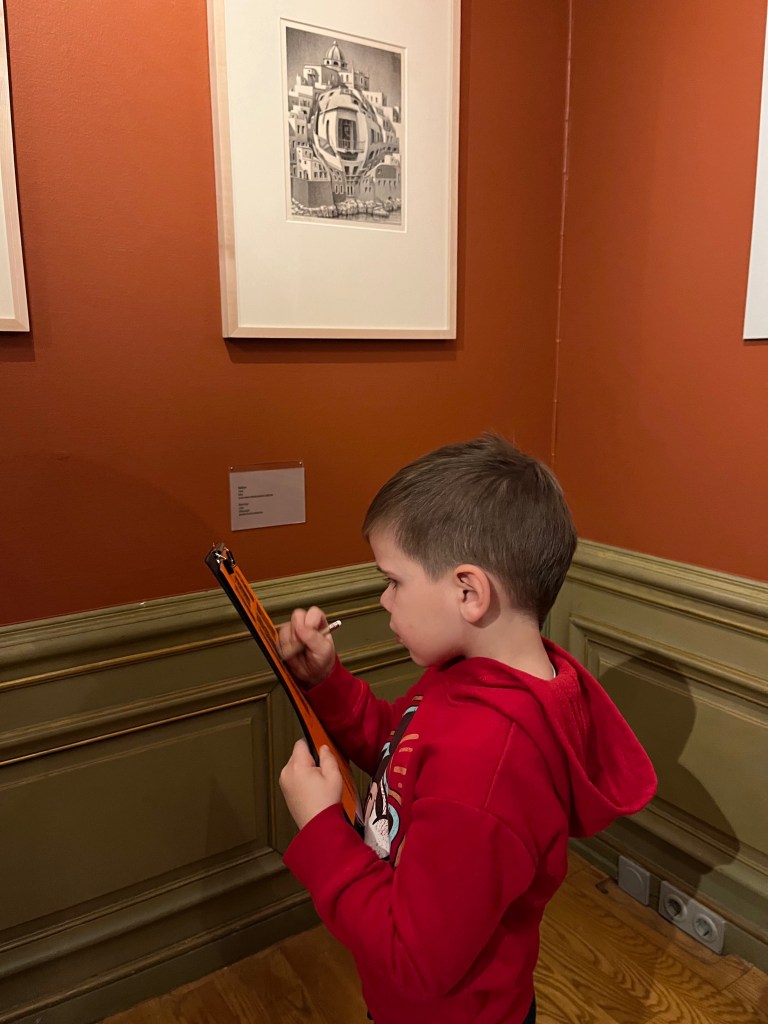
Step 4: Go on a scavenger hunt and have fun as a family!
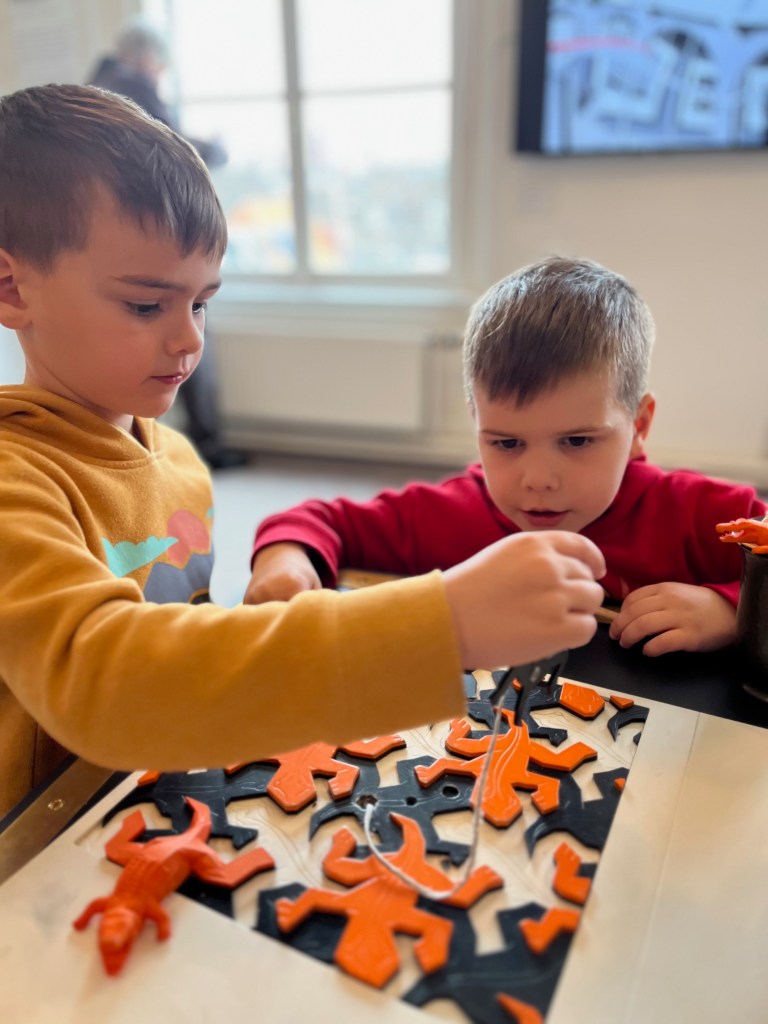
Finding the works was a hit! They were so surprised by the format and size of some of the works compared to their expectations from book illustrations. On top of the scavenger hunt experience, the museum itself had many interactive elements including creating your own tessellation art and becoming a part of an optical illusion.



 Domino Tracks
Leave a comment